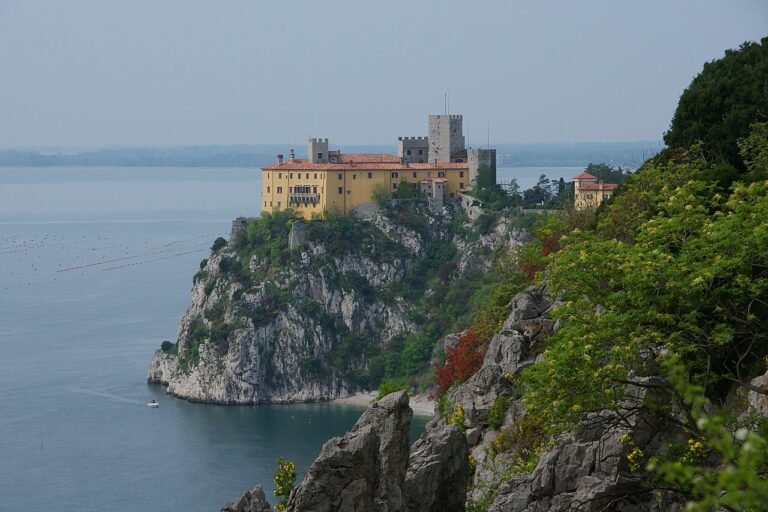

Muggia Castle
Photos


At a glance
- Region
- Friuli-Venezia Giulia
- Province
- Trieste (TS)
- Town
- Muggia
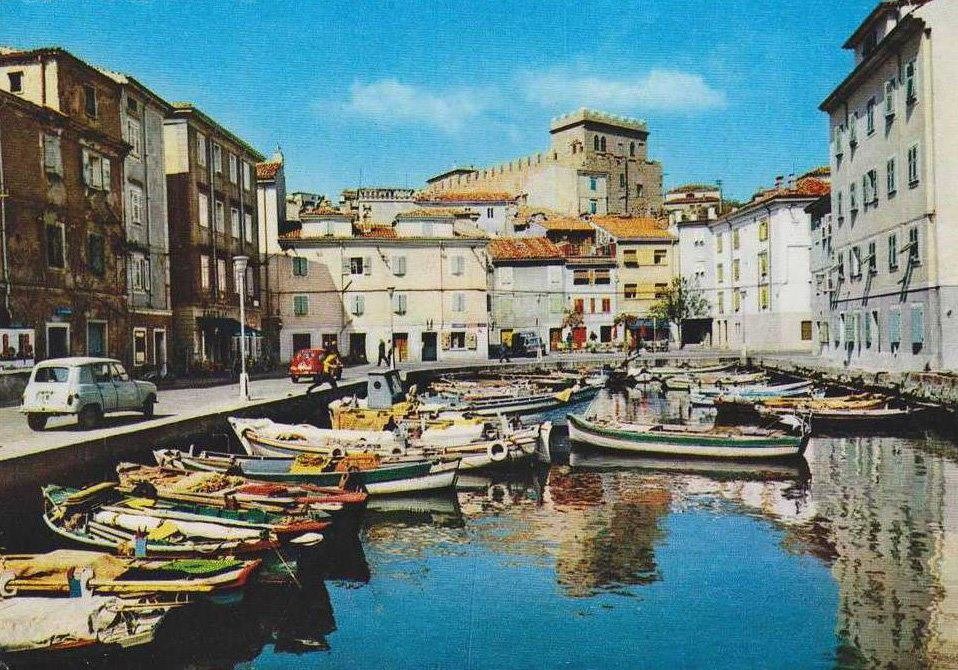
The Muggia Castle, in the province of Trieste (Friuli-Venezia Giulia), stands in the old quarter of the Istrian-Venetian town overlooking the Gulf of Trieste, a few kilometres from the Slovenian border. Founded in the 14th century for defence, it is an example of military architecture of Istrian-Venetian character, in a panoramic position between the houses of the historic centre and the sea.
History of Muggia Castle
The foundation in 1374
The castle was founded in 1374 by the Patriarch of Aquileia Marquard of Randeck. A quadrilateral of walls and watchtowers, completed in 1399, was added to the original tower. Muggia had been part of the domains of the Patriarchate of Aquileia since 931; in 1420 it passed to the Republic of Venice.
From decline to restoration
The castle remained a military fortress until the end of the 18th century, was restored in 1735 and fell into neglect in the 19th century. In 1903 it was bought by the Derossi family, to whom its present appearance is due. From 1991 it belonged to the sculptor Villi Bossi and his wife, who restored it and lived there for over thirty years. According to the Discover Trieste portal, since March 2026 it has belonged to the company Culture Arti e Saperi S.r.l., supported by a non-profit foundation, which states that it wants to enhance it and preserve it as part of the life of Muggia.
What to see
The castle is a fortified building with the original tower and the quadrilateral of walls and towers; the battlements are of the Guelph type. It stands in the heart of the old quarter, in Calle Lauri. No verified data on the interiors are available here: to be confirmed with the management.
Where it is and how to get there
The address is Calle Lauri 8, 34015 Muggia (TS). Muggia is linked to Trieste by bus line 20, which runs from Trieste railway station (Trieste Trasporti service). Road and parking directions: to be confirmed.
Nearby you can see the cathedral of Santi Giovanni e Paolo, consecrated in 1293, the Civico museo archeologico and the Muggia Vecchia Archaeological Park with the basilica of Santa Maria Assunta. Staying in the province of Trieste, Miramare Castle is also worth a visit.
Practical information
Tickets and where to buy them
Visits are by reservation. Prices and payment methods: to be confirmed with the management (info@cultureartiesaperi.it, tel. +39 040 3405415, website castellodimuggia.it).
Opening days and hours
According to Discover Trieste the castle is open from Thursday to Monday (closed Tuesday and Wednesday), only with a guided visit at 10, 11, 12 and 15; it is not always open, so it is best to confirm the date before setting out.
Where to eat
To be confirmed: in the old quarter of Muggia there are bars and restaurants, but we have no verified source on catering services in the castle.
Parking and services
To be confirmed with the Municipality of Muggia or the castle management.
Accessibility and other information
To be confirmed. The old quarter is partly pedestrian: for accessibility, contact the management.
Frequently asked questions
Can you visit Muggia Castle?
Yes, but only with a guided visit by reservation and not every day; the castle is not always open.
Where is Muggia Castle?
In Muggia, in the province of Trieste, at Calle Lauri 8, in the historic centre.
What period is Muggia Castle from?
It was founded in 1374 by Patriarch Marquard of Randeck; its present appearance is due to the restoration of the early 20th century.
Hours, prices and services change often: before your visit, call the official number or check the castle’s website. Last checked: November 2026.
Sources: Wikipedia, Muggia; Discover Trieste, Muggia Castle; FAI, Castello di Muggia; Consorzio Castelli FVG.
How to get there
Directions with Google Maps Apple Maps
Hiking trails map (Waymarked Trails) Walking route
Trails: data © OpenStreetMap contributors (ODbL). Always check signs and trail conditions before setting off.
Foto: author not stated, published with permission