Castle of the Abbadia di Vulci

Photos


At a glance
- Region
- Lazio
- Province
- Viterbo (VT)
- Town
- Canino
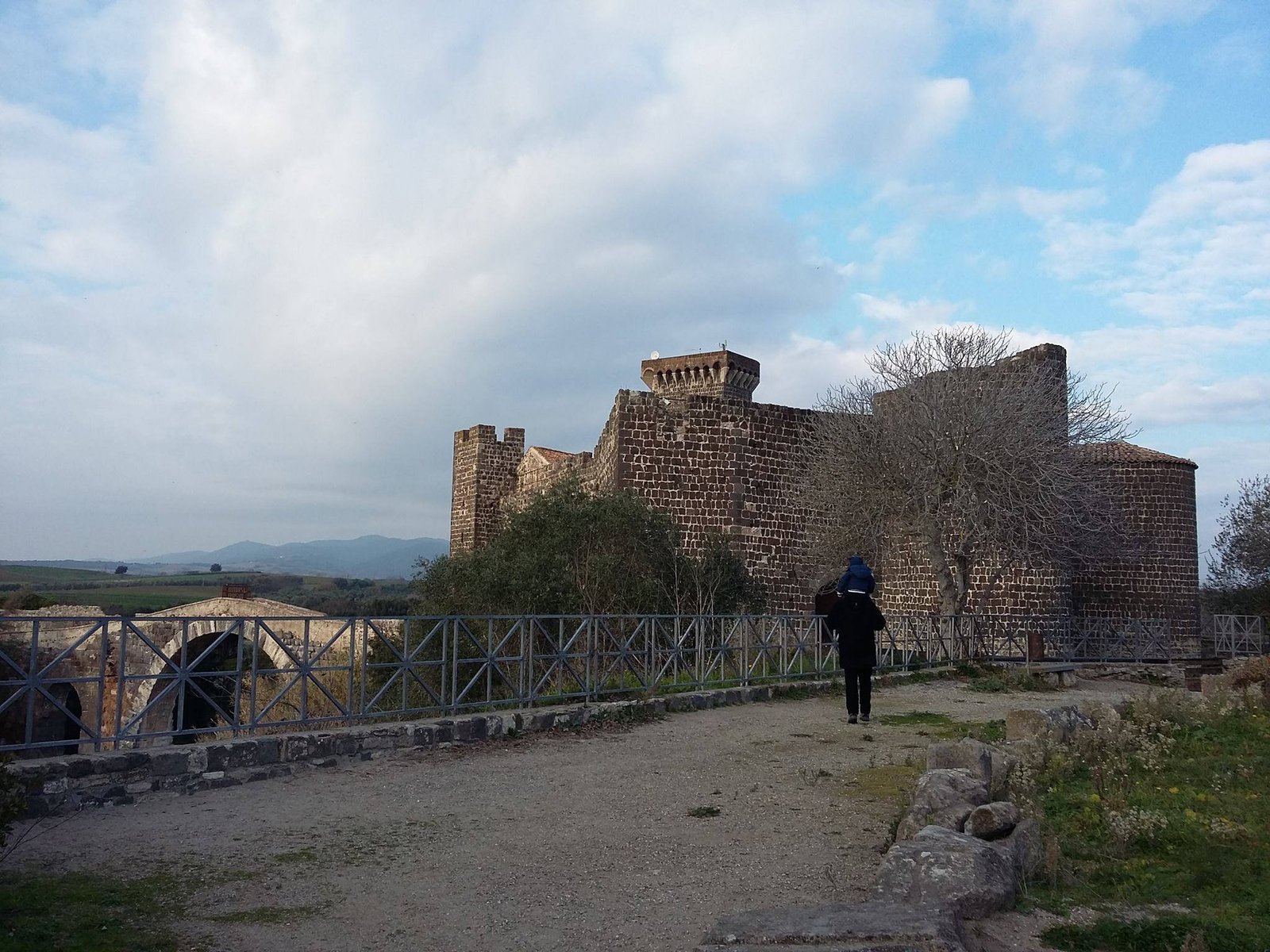
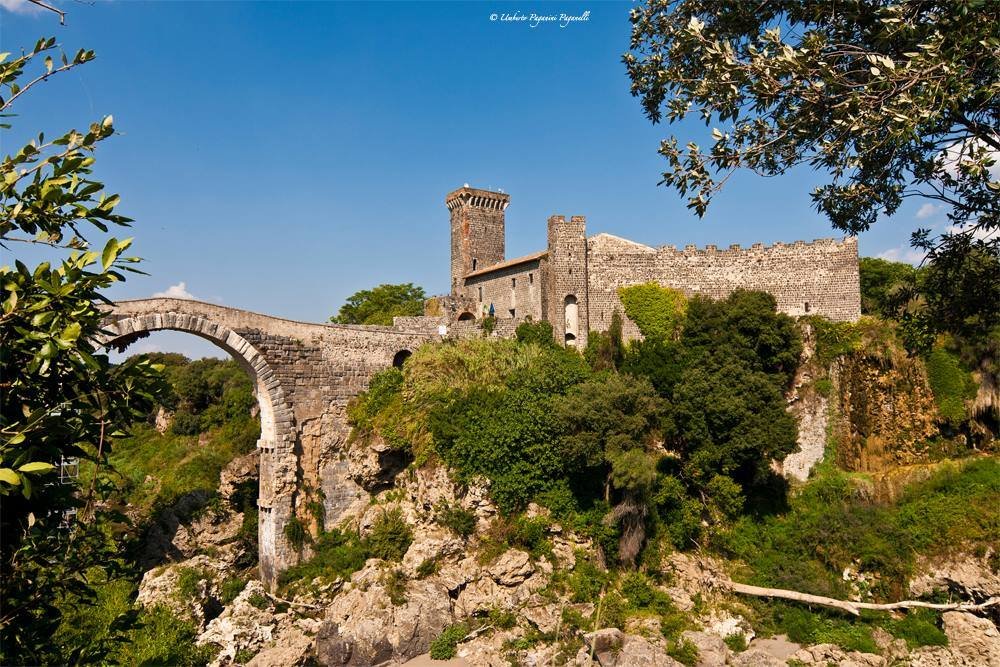
The castle of the Abbadia di Canino, in the province of Viterbo (Lazio), stands in the locality of Vulci, on the bank of the Fiora river, next to the ancient Etruscan-Roman bridge. Today it houses the Vulci National Archaeological Museum and is one of the entry points to the archaeological area of the Etruscan city.
History of the Castle of the Abbadia di Canino
From abbey to fortress
The first traces of a defensive structure date back to the 9th century; the present trapezoidal layout is dated to the 12th century. According to museionline the building began as a Benedictine abbey dedicated to Saint Mamiliano and was then fortified, with a watchtower, at the centre of disputes between the Aldobrandeschi, Orvieto and the Prefetti di Vico. The castle was built to protect the bridge, of Etruscan-Roman date (3rd century BC), which bears the name «Devil’s Bridge» or Rainbow Bridge.
Farnese, Bonaparte and Torlonia
In 1430 Ranuccio Farnese the Elder received the fief; in the 16th century the Farnese enlarged the structure and in 1537 the castle entered the Duchy of Castro, returning to the Papal State in 1649. In the 17th century it was a papal customs post. In 1808 it passed to Lucien Bonaparte, in 1856 to the Torlonia and in 1960 it was bought by the State. The museum opened in 1975 and was re-arranged in 2016.
What to see
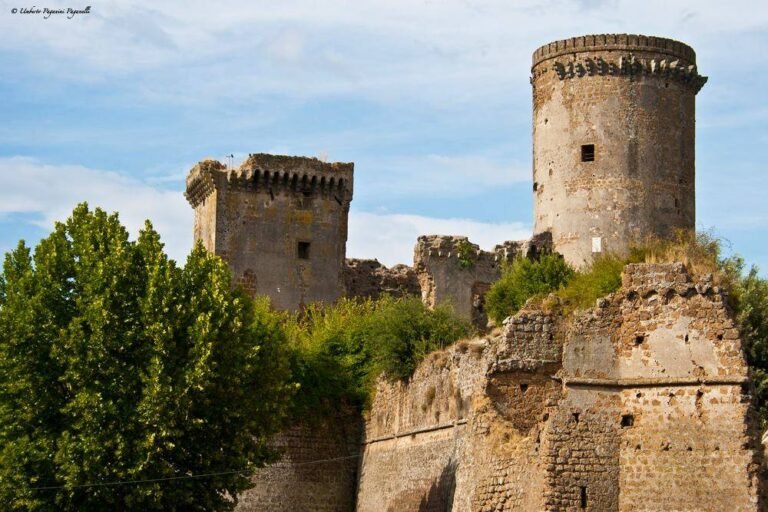
The castle has a trapezoidal plan and is built with blocks of dark volcanic rock. According to the Ministry of Culture it has six towers overlooking the Fiora and a moat on the eastern side; museionline mentions a tower about 30 metres high. Inside, the exhibition route can be reached by lift.
Where it is and how to get there
The castle is in the locality of Vulci, 01011 Canino (VT), along the SP 107 according to museionline. It is reached by car: the museum has a large free car park. For public transport connections: to be confirmed with the Municipality of Canino.
Practical information
Tickets and where to buy them
According to the Regional Directorate of Museums of Lazio the full ticket costs 5 euros, the reduced ticket (ages 18-25) 2 euros. It can be bought at the ticket office or with the «Musei Italiani» app. Other sources report different figures and free entry on the first Sunday of the month: to be confirmed.
Opening days and hours
The museum is open every day from 8.30 to 19.30 (last entry 18.30) and is closed on Mondays, on 1 January and on 25 December, except for special openings. Always check before leaving.
Where to eat
The complex has vending machines for coffee, drinks and snacks. For restaurants nearby: to be confirmed, ask the Municipality of Canino.
Parking and services
Large free car park. Vending machines are available; photographs are allowed. The visit lasts about 45 minutes to 1 hour.
Accessibility and other information
The route is accessible by lift. For groups of more than 25 people audio guides are recommended. Official contacts: tel. 0761 437787 (option 3), e-mail drm-laz.muvulci@cultura.gov.it.
Frequently asked questions
What is inside the castle?
The Vulci National Archaeological Museum, opened in 1975 and re-arranged in 2016.
How much does admission cost?
According to the Regional Directorate of Museums of Lazio, 5 euros full price and 2 euros reduced (ages 18-25).
Is the Castle of the Abbadia di Canino worth visiting?
Yes, if you love archaeology and landscape: it combines a medieval fortress, the museum and the bridge over the Fiora, in the territory of Canino (Viterbo).
Opening hours, prices and services change often: before your visit, call the official number or check the castle’s website. Last checked: November 2026.
Sources: Direzione regionale Musei Lazio (MiC); museionline.
How to get there
Directions with Google Maps Apple Maps
Hiking trails map (Waymarked Trails) Walking route
Trails: data © OpenStreetMap contributors (ODbL). Always check signs and trail conditions before setting off.
Foto: author not stated, published with permission